How To Find Out My Public Ip Address Vpn Proxy For Mac
If your router is assigned an IP address by your Internet Service Provider (ISP) via the, you may be able to force a change in the external IP address assigned to it by your ISP by resetting the router or powering it off and on. That may or may not result in a new IP address being assigned to your router depending on how your ISP allocates IP addresses. With some ISPs, the ISP's DHCP server may assign the same IP address to your router as was used before.
E.g, an ISP might assign the same IP address again, if the address of your router is unchanged, which would normally be the case unless you've replaced the router. For other ISPs, simply powering off or resetting the router can give you a new external IP address for the router. You could purchase, or use a free, ) service which will assign your system an IP address from whatever IP address range the VPN service provider uses for its VPN clients. Some VPN service providers have servers in multiple countries, so that you can select the country with which the IP address you get is associated.
Alternatively, you could use a service. You could then, so that systems on the Internet will see the IP address of the proxy server for connections from your system, rather than the IP address assigned to your router by your ISP. As with VPN service providers, some proxy server services have systems in multiple countries, so you can use an IP address that's assigned to a system in another country. You could also buy service, just as you could purchase VPN or proxy server service, establish an SSH connection to the SSH server and, e.g., web browser traffic, through the SSH connection. E.g., if you are using a Microsoft Windows system, you could that you could use for a proxy server. Systems on the Internet, e.g., websites, would then see the IP address of the SSH server when you connect to them, rather than the IP address assigned to your router by your ISP.
You could also use software, which is free and anonymizes your traffic, so external systems don't see your ISP-assigned IP address. Instead, your traffic passes through multiple servers, disguising your IP address from the end system and also the intermediary systems on the Tor network.
All but the first method, which assumes you are getting a new external IP address for your router, rely on you routing connections through some external server. E.g., but you are going to need access to some external proxy server for that to result in external systems seeing a different IP address for connections from systems behind your router. If your home connection have an static IP, you can't change it by rebooting the router. The only way would be asking your ISP which may not comply. If your home connection have a dynamic IP (like mine), rebooting the router may work. You can do that by manually turning it off and then on or logging in into the admin dashboard and rebooting from there.
How To Find Out My Public Ip Address Vpn Proxy For Mac
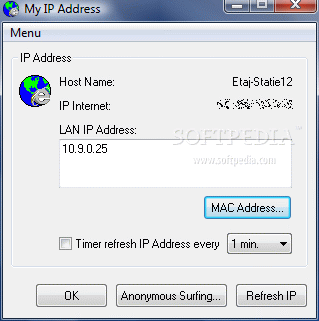
Using a VPN (or Tor, or other services) doesn't 'change' your IP, but adds another layer in your connection. So you are connected to the VPN server and then the VPN connects to the website or service that you want to use. However this may slow down the speed of the service that you are using, so you should use something that is near to you. Free services may cap your speed connection to the VPN, so its best to use a paid one if possible.
The route of your ISP to the VPN service may also affect the quality of the connection which is something that you cannot fix. Please note that a VPN service may (or may not) log what you do when using their service. Some free/trial services. I'm listing these services as examples, use them at your own risk and discretion:. Tunnelbear. Tor (only works on websites that you open in the Tor browser, ).
SurfEasy (bundled in Opera browser). Proton VPN Tor is not recommended is some use cases, so it is recommended to read their About page. You can test if it works using or searching 'my ip address' in.
Selecting the Right Tool Is Critical Practically every other week there’s a major news story about encryption, leaked data, snooping, or other digital privacy concerns. Many of these articles talk about the importance of beefing up the security of your Internet connection, like using a VPN (Virtual Private Network) when you’re on public coffee shop Wi-Fi, but they’re often light on the details. How exactly do the proxy servers and VPN connections we keep hearing about actually work? If you’re going to invest the time and energy in improving security you want to be sure you’re selecting the right tool for the right job. Although they are fundamentally different, VPNs and proxies have a single thing in common: they both allow you to appear as if you are connecting to the internet from another location.
How they accomplish this task and the degree to which they offer privacy, encryption, and other functions, however, varies wildly. Proxies Hide Your IP Address A proxy server is a server that acts as a middleman in the flow of your internet traffic, so that your internet activities appear to come from somewhere else. Let’s say for example you are physically located in New York City and you want to log into a website that is geographically restricted to only people located in the United Kingdom. You could connect to a proxy server located within the United Kingdom, then connect to that website. The traffic from your web browser would appear to originate from the remote computer and not your own. Proxies are great for low-stakes tasks like watching region-restricted YouTube videos, bypassing simple content filters, or bypassing IP-based restrictions on services.
For example: Several people in our household play an online game where you get a daily in-game bonus for voting for the game server on a server ranking website. However, the ranking website has a one-vote-per-IP policy regardless of whether different player names are used. Thanks to proxy servers each person can log their vote and get the in-game bonus because each person’s web browser appears to be coming from a different IP address.
On the other side of things, proxy servers are not so great for high-stakes tasks. Proxy servers only hide your IP address and act as a dumb man-in-the-middle for your Internet traffic. They don’t encrypt your traffic between your computer and the proxy server, they don’t typically strip away identifying information from your transmissions beyond the simple IP swap, and there are no additional privacy or security considerations built in. Anyone with access to the stream of data (your ISP, your government, a guy sniffing the Wi-Fi traffic at the airport, etc.) can snoop on your traffic. Further, certain exploits, like malicious Flash or JavaScript elements in your web browser, can reveal your true identity. This makes proxy servers unsuitable for serious tasks like preventing the operator of a malicious Wi-FI hotspot from stealing your data. Finally, proxy server connections are configured on an application-by-application basis, not computer-wide.
You don’t configure your entire computer to connect to the proxy–you configure your web browser, your BitTorrent client, or other proxy-compatible application. This is great if you just want a single application to connect to the proxy (like our aforementioned voting scheme) but not so great if you wish to redirect your entire internet connection. The two most common proxy server protocols are HTTP and SOCKS.
HTTP Proxies The oldest type of proxy server, HTTP proxies are designed expressly for web-based traffic. You plug the proxy server into your web browser’s configuration file (or use a browser extension if your browser doesn’t natively support proxies) and all your web traffic is routed through the remote proxy. If you’re using an HTTP proxy to connect to any sort of sensitive service, like your email or bank, it is critical you use a browser with SSL enabled, and connect to a web site that supports SSL encryption. As we noted above, proxies do not encrypt any traffic, so the only encryption you get when using them is the encryption you provide yourself.
SOCKS Proxies RELATED: The SOCKS proxy system is a useful extension of the HTTP proxy system in that SOCKS is indifferent to the type of traffic that passes through it. Where HTTP proxies can only handle web traffic, a SOCKS server will simply pass along any traffic it gets, whether that traffic is for a web server, an FTP server, or BitTorrent client. In fact, in, we recommend the use of, an anonymizing SOCKS proxy service based out of Canada. The downside to SOCKS proxies is that they are slower than pure HTTP proxies because they have more overhead and, like HTTP proxies, they offer no encryption beyond what you personally apply to the given connection. How to Select a Proxy When it comes to selecting a proxy, it pays towell, pay. While the Internet is awash with thousands of free proxy servers, they are almost universally flaky with poor uptime. Those kind of services might be great for a one-off-task that takes a few minutes (and is not particularly sensitive in nature), but it’s really not worth relying on free proxies of unknown origin for anything more important than that.
If you know what you’re getting into in terms of quality and privacy, you can find piles of free proxy servers at, a well-established free-proxy database. While there are stand-alone commercial services out there like aforementioned, the rise of faster computers and mobile devices coupled with faster connections (both of which reduce the impact of encryption overhead) the proxy has largely fallen out of favor as more and more people opt to use superior VPN solutions. Virtual Private Networks Encrypt Your Connection Virtual Private Networks, like proxies, make your traffic appear as if it comes from a remote IP address. But that’s where the similarities end. VPNs are set up at the operating system level, and the VPN connection captures the entire network connection of the device it is configured on. This means that unlike a proxy server, which simply acts as a man-in-the-middle server for a single application (like your web browser or BitTorrent client), VPNs will capture the traffic of every single application on your computer, from your web browser to your online games to even Windows Update running in the background. Furthermore, this entire process is all passed through a heavily encrypted tunnel between your computer and the remote network.
This makes a VPN connection the most ideal solution for any sort of high-stakes network use where privacy or security is a concern. With a VPN, neither your ISP nor any other snooping parties can access the transmission between your computer and the VPN server. If you were traveling in a foreign country, for example, and you were worried about logging into your financial web sites, email, or even connecting safely to your home network from afar, you could easily configure your laptop to use a VPN. Even if you’re not currently on a business trip in rural Africa, you can still benefit from using a VPN. With a VPN enabled, you never have to worry about crappy Wi-Fi/network security practices at coffee shops or that the free internet at your hotel is full of security holes. Although VPNs are fantastic, they are not without their downsides.
What you get in whole-connection-encryption, you pay for in money and computing power. Running a VPN requires good hardware and, as such, good VPN services are not free (although some providers, like, do offer a very spartan free package). Expect to pay at least a few dollars a month for a robust VPN service,. RELATED: The other cost associated with VPN’s is performance. Proxy servers simply pass your information along. There is no bandwidth cost and only a little extra latency when you use them.
VPN servers, on the other hand, chew up both processing power and bandwidth on account of the overhead introduced by the encryption protocols. The better the VPN protocol and the better the remote hardware, the less overhead there is. The process of selecting a VPN is a bit more nuanced than selecting a free proxy server.
If you’re in a hurry and you want a reliable VPN service that we both highly recommend and use ourselves on a daily basis, we’ll direct you towards as our VPN of choice. If you’d like to read a more in-depth look at VPN features and how to select one, we’d encourage you to check In summary, proxies are great for hiding your identity during trivial tasks (like “sneaking” into another country to watch a sports match) but when it comes to more series tasks (like protecting yourself from snooping) you need a VPN.