Alexander Graham Bell Familie Zildjian
Although Alexander Graham Bell is best remembered as the inventor of the, he invented other devices too. Bell developed several sonic technologies, including the photophone (1880) and the Graphophone (1886). He also developed medical technology. After the shooting of U.S.
In July 1881, Bell teamed up with professor of the U.S. Nautical Almanac Office to develop an electrical bullet probe. The pair demonstrated the probe in the autumn of 1881. Bell later shifted his attention to aerial technology. He founded the in 1907. The first had two parts: a transmitter and a receiver.
Alexander Graham Bell Familie Zildjian Cymbals
The transmitter comprised three parts—a drumlike device (a cylinder with a covered end), a needle, and a. The covered end of the drumlike device was attached to the needle. The needle was connected by wire to the battery, and the battery was connected by wire to a receiver. When Bell spoke into the open end of the drumlike device, his voice made the paper and needle vibrate. The vibrations were then converted into an which traveled along the wire to the receiver.
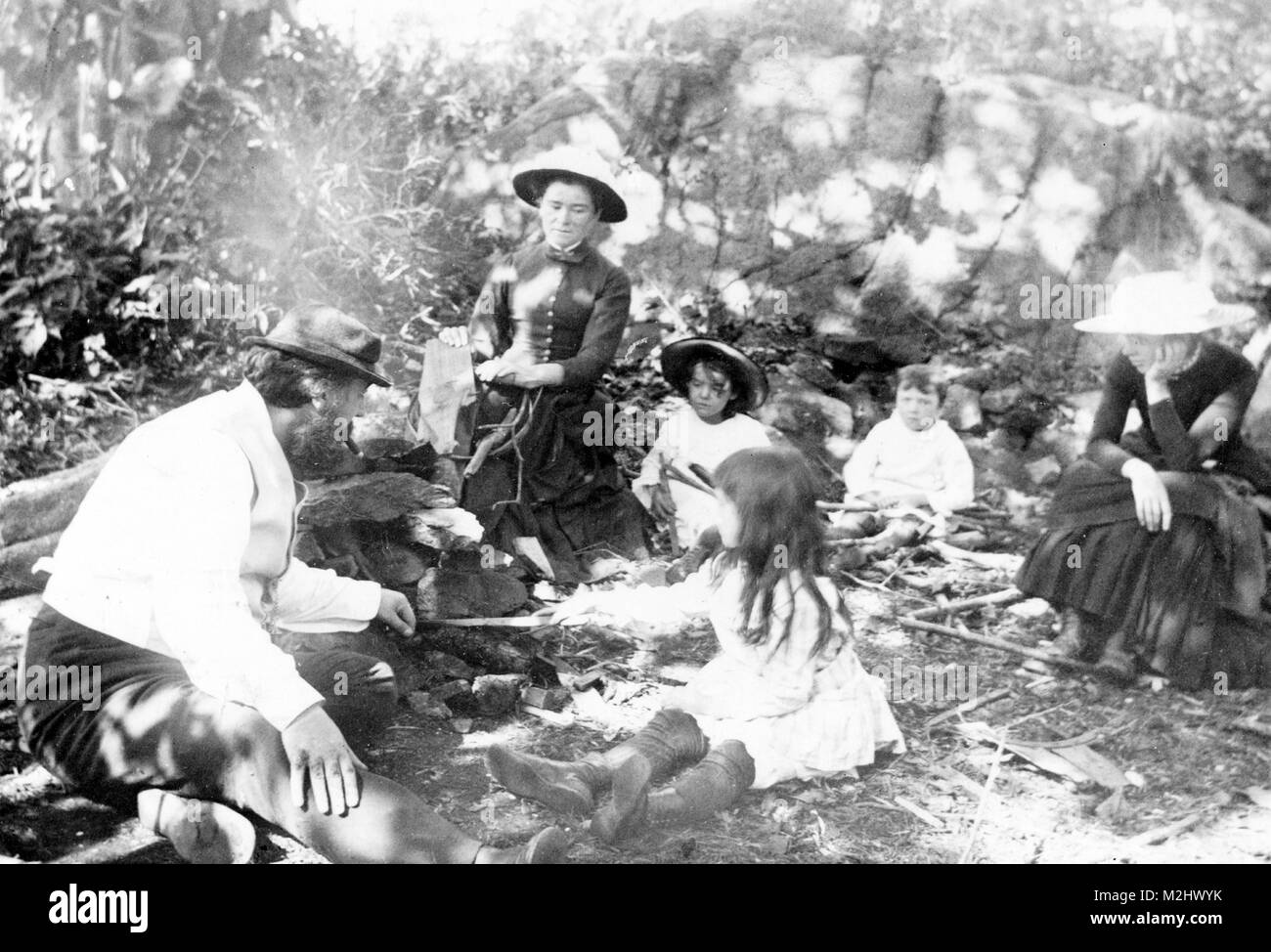
Alexander (“Graham” was not added until he was 11) was born to Alexander Melville Bell and Eliza Grace Symonds. His mother was almost deaf, and his father taught to the deaf, influencing Alexander’s later career choice as teacher of the deaf. At age 11 he entered the Royal High School at, but he did not enjoy the compulsory curriculum, and he left school at age 15 without graduating. In 1865 the family moved to London. Alexander passed the entrance examinations for University College London in June 1868 and there in the autumn. However, he did not complete his studies, because in 1870 the Bell family moved again, this time immigrating to after the deaths of Bell’s younger brother Edward in 1867 and older brother Melville in 1870, both of.

The family settled in, Ontario, but in April 1871 Alexander moved to Boston, where he taught at the Boston School for Deaf Mutes. He also taught at the Clarke School for the Deaf in, Massachusetts, and at the American School for the Deaf in, Connecticut. One of Bell’s students was, daughter of Gardiner Greene Hubbard, a founder of the Clarke School. Mabel had become deaf at age five as a result of a near-fatal bout of. Bell began working with her in 1873, when she was 15 years old.
Despite a 10-year age difference, they fell in love and were married on July 11, 1877. They had four children, Elsie (1878–1964), Marian (1880–1962), and two sons who died in infancy.

While pursuing his teaching profession, Bell also began researching methods to transmit several messages simultaneously over a single wire—a major focus of telegraph at the time and one that ultimately led to Bell’s invention of the telephone. In 1868 Joseph Stearns had invented the duplex, a system that transmitted two messages simultaneously over a single wire., the dominant firm in the industry, acquired the rights to Stearns’s duplex and hired the noted inventor to devise as many multiple-transmission methods as possible in order to block competitors from using them. Edison’s work culminated in the quadruplex, a system for sending four simultaneous telegraph messages over a single wire. Inventors then sought methods that could send more than four; some, including Bell and his great rival, developed designs capable of subdividing a telegraph line into 10 or more channels. These so-called harmonic telegraphs used reeds or tuning forks that responded to specific acoustic frequencies. They worked well in the laboratory but proved unreliable in service. A group of investors led by Gardiner Hubbard wanted to establish a federally chartered telegraph company to compete with Western Union by contracting with the Post Office to send low-cost telegrams.
Hubbard saw great promise in the harmonic telegraph and backed Bell’s experiments. Bell, however, was more interested in transmitting the human voice. Finally, he and Hubbard worked out an agreement that Bell would devote most of his time to the harmonic telegraph but would continue developing his telephone concept. From harmonic telegraphs transmitting musical tones, it was a short step for both Bell and Gray to transmit the human voice. Bell filed a patent describing his method of transmitting sounds on February 14, 1876, just hours before Gray filed a (a statement of concept) on a similar method. On March 7, 1876, the Patent Office awarded Bell what is said to be one of the most-valuable patents in history.
It is most likely that both Bell and Gray independently devised their telephone designs as an outgrowth of their work on harmonic telegraphy. However, the question of priority of invention between the two has been controversial from the very beginning. Watson describing invention of the telephone Thomas A. Watson, assistant to Alexander Graham Bell, discussing the birth of the telephone, including the first words spoken. Department of the Interior, National Park Service, Edison National Historical Site Despite having the patent, Bell did not have a fully functioning instrument.
He first produced intelligible speech on March 10, 1876, when he summoned his laboratory assistant, with words that Bell transcribed in his lab notes as “Mr. Watson—come here—I want to see you.” Over the next few months, Bell continued to refine his instrument to make it suitable for public exhibition. In June he demonstrated his telephone to the judges of the Centennial Exhibition, a test witnessed by Brazil’s Emperor and the celebrated Scottish physicist. In August of that year, he was on the receiving end of the first one-way call, transmitted from Brantford to nearby Paris, Ontario, over a telegraph wire. Bell, Alexander Graham Alexander Graham Bell, inventor who patented the telephone in 1876, lecturing at Salem, Massachusetts (top), while friends in his study at Boston listen to his lecture via telephone, February 12, 1877. © Photos.com/Jupiterimages Gardiner Hubbard organized a group that established the in July 1877 to commercialize Bell’s telephone. Bell was the company’s technical adviser until he lost interest in telephony in the early 1880s.
Although his invention rendered him independently wealthy, he sold off most of his stock holdings in the company early and did not profit as much as he might have had he retained his shares. Thus, by the mid-1880s his role in the telephone industry was marginal. Alexander Graham Bell, who patented the telephone in 1876, inaugurating the 1,520-km (944-mile) telephone link between New York City and Chicago on October 18, 1892.
Photos.com/Thinkstock By that time, Bell had developed a growing interest in the of and playback. Although Edison had invented the phonograph in 1877, he soon turned his attention to other technologies, especially and lighting, and his machine, which recorded and reproduced sound on a rotating cylinder wrapped in tinfoil, remained an unreliable and cumbersome device. In 1880 the French government awarded Bell the Volta Prize, given for achievement in electrical science. Bell used the prize money to set up his Volta Laboratory, an institution devoted to studying and improving the lives of the deaf, in Washington, D.C. There he also devoted himself to improving the phonograph. By 1885 Bell and his colleagues (his cousin Chichester A.
Bell and the inventor ) had a design fit for commercial use that featured a removable cardboard cylinder coated with mineral wax. They called their device the and applied for patents, which were granted in 1886.
The group formed the Volta Graphophone Company to produce their invention. Then in 1887 they sold their patents to the American Graphophone Company, which later evolved into the Columbia Phonograph Company. Spectaculator 8 keygen for mac. Bell used his proceeds from the sale to endow the Volta Laboratory.